Tooth Extractions Fulshear
When It’s Time to Say Goodbye to Your Tooth
If damage or decay is present, but a dental filling, a dental crown, or another restorative treatment is an option, then that’s how we will proceed. After all, our goal is always to save your natural teeth whenever possible. However, if the tooth in question does not respond appropriately or is no longer viable, there is a good chance that an extraction will be the next step to ensuring the health of your smile. Don’t hesitate to call our dental office in Fulshear to find out more about this method of treatment and how it can help.
Why Choose Villagio Family & Cosmetic Dental for Tooth Extractions?
- Patient Safety & Comfort Are Our Priorities
- Evening & Weekend Appointments Available
- Dentists Who Can Perform Extractions In-House
Reasons Why Tooth Extractions Are Necessary

As we mentioned above, tooth extractions are not our first option. In fact, this emergency dental treatment is only recommended when:
- Your child has a baby tooth that will not fall out on its own, and the permanent tooth needs to erupt.
- You are preparing for orthodontic treatment and need to remove one or more teeth to ensure adequate space for proper realignment.
- You have a severely decayed tooth that is putting your healthy teeth at risk.
- You’ve suffered extreme facial trauma and cannot save the tooth.
- You are experiencing gum recession as a result of advanced gum disease, and your tooth is becoming loose.
The Process of Removing a Tooth
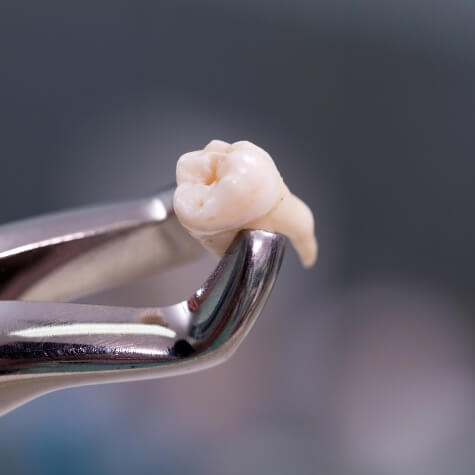
After you’ve settled comfortably into the treatment chair, your dentist in Fulshear will numb your mouth thoroughly. If the tooth in question has already erupted through the gumline, then they will rock it loose until it’s ready to be removed. If it’s trapped underneath, however, then they will need to make a small incision in the gums first. Then, they can carefully remove the tooth section by section. In both cases, the final step is to tend to the extraction site before providing you with a list of aftercare instructions.
Tooth Extraction Aftercare

In the days following your tooth extraction in Fulshear, it’s important that you:
- Don’t smoke, spit, or exercise
- Take prescribed or OTC pain medication as directed
- Stick to a soft foods diet
- Change the gauze as needed
- Brush and floss carefully, especially around the extraction site
- Keep your head elevated, even while you sleep
- Use a cold compress for 10 minutes at a time
Around the five-day mark, you should feel significantly better. If that’s not the case, then call us right away.
Understanding the Cost of Tooth Extractions

The cost of tooth extraction in Fulshear may have you wondering whether you can afford it. Dental treatment of any kind can leave patients nervous about the overall price, but the good news is that you don’t need to be fearful. Instead, our team will discuss the estimated cost during your consultation and explain how you can use your dental insurance to help reduce your out-of-pocket expenses.
Factors That Can Affect Tooth Extraction Cost

How much you can expect to spend on your tooth extraction will depend on the following factors:
- The type of tooth that needs to be extracted
- The location of the affected tooth (molars can be more expensive because of their complex root systems)
- The number of teeth that need to be removed
- Whether you require surgical or non-surgical removal
- Whether you will require dental sedation in addition to local anesthesia
Does Dental Insurance Cover Tooth Extractions?

Fortunately, most tooth extractions are partially covered by dental insurance. While each plan differs, most companies agree that this procedure is essential for ensuring long-term oral health. When reviewing your policy, you will need to determine how much your insurance company will agree to pay after you’ve met your annual deductible. Generally, you can expect to save about 50% of the total cost once your claim has been filed and approved.
How to Make Tooth Extractions Affordable

If you do not have dental insurance or you cannot afford to pay the remaining 50% up front, Villagio Family & Cosmetic Dental can provide alternative solutions to ease this financial burden. Our dentist in Fulshear offers two options:
- In-House Dental Coverage: You pay one low annual fee and receive preventive services and discounted treatment options in our office.
- Flexible Financing: You can choose to enroll in a low- or no-interest payment plan through CareCredit or Cherry, making it easier to budget for your tooth extraction and pay off your bill over time.
Tooth Extractions FAQs
Is there an alternative treatment for tooth extractions?
It’s normal to feel a little nervous if you’ve just learned that you need to have a troublesome tooth removed. Many patients even wonder whether an extraction is truly necessary, or if some other procedure might help improve their dental health instead.
In some cases, such as when a severe toothache is causing problems, a root canal can alleviate the underlying infection. This is usually followed by placing a dental crown to protect the tooth and allow you to continue using it normally. But if our team in Katy suggested this procedure, we’ve likely already determined that your tooth is too damaged or decayed for any other treatment to be effective.
Does it hurt to have a tooth removed?
Many people experience anxiety around more involved dental procedures, and extractions are no exception. But if you’re worried that your treatment will hurt, you can thankfully set your fears aside. Firstly, our team will numb your mouth before starting your procedure so that you might feel pressure while we work, but not outright pain. Furthermore, we also offer oral conscious (in pill form) and IV dental sedation to help you through even the most complex procedures.
Then, it’s normal to feel sore and swollen for a few days after your appointment. This can often be addressed by placing an ice pack on the tender side of your face, or by taking over-the-counter medications, such as acetaminophen or ibuprofen.
How are wisdom tooth extractions different?
A simple tooth extraction can often be as straightforward as gently elevating your tooth from the socket, then wiggling it free with forceps. But if you have problematic wisdom teeth requiring removal, there’s a chance they may have become trapped, or impacted, in your gums or jawbone.
Partially erupted wisdom teeth often require surgery to extract, which involves numbing and/or sedating you before making a small incision in your gums to access the tooth. In some cases, the enamel must be broken into smaller pieces to be pulled without harming the jawbone.
What are the options for replacing my extracted tooth?
Our team typically recommends replacing your recently removed tooth as soon as possible to prevent the jawbone degeneration and dental drifting that accompany tooth loss. Thankfully, we offer multiple restorative treatments that can potentially be used to close the spaces in your smile.
For instance, we can provide a lifelike set of dentures or a customized dental bridge, depending on the number of teeth removed. You might also be a good candidate for dental implants, which involve surgically placing the required number of support rods into your jaw, which eventually fuse with the bone to become a more permanent part of your mouth.